
Thesis
- The mechanics of safe stage combat do not change with the century.
- What changes is posture, rhythm, distance, and presentation.
- The same punch can read as mythic, chaotic, tactical, or athletic depending on how it is framed.
- Technique remains constant. Silhouette changes.
Ancient Greek — Mythic Endurance
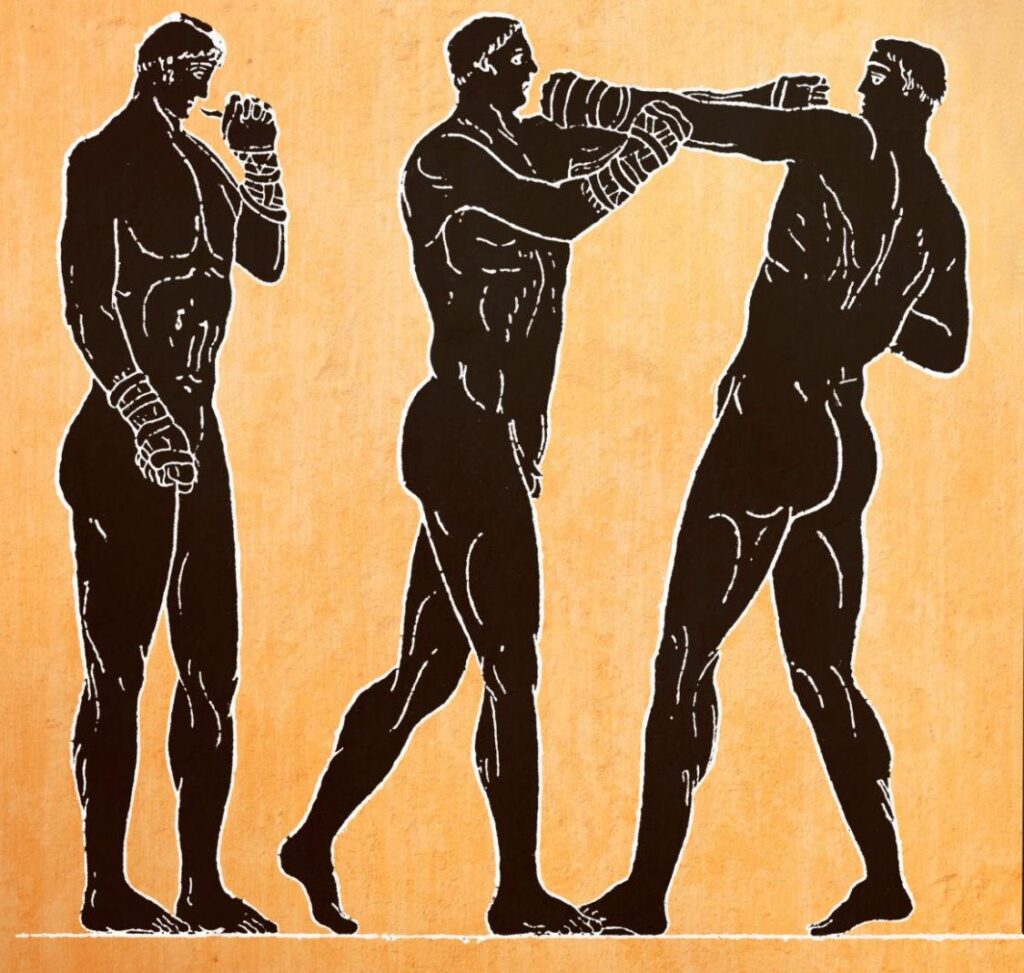
- Upright, squared stance.
- Minimal slipping or evasive head movement.
- Strong, declarative strikes.
- Slower rhythm between exchanges.
- Visible accumulation of fatigue and damage.
- Little circling or dancing.
- Conflict reads as a test of endurance rather than cleverness.
Actor Adjustment

- Stay tall and grounded.
- Reduce bounce and lateral movement.
- Deliver strikes with full commitment.
- Let recovery moments linger.
- Allow fatigue to become visible over time.
Roman Adaptation — From Endurance to Spectacle
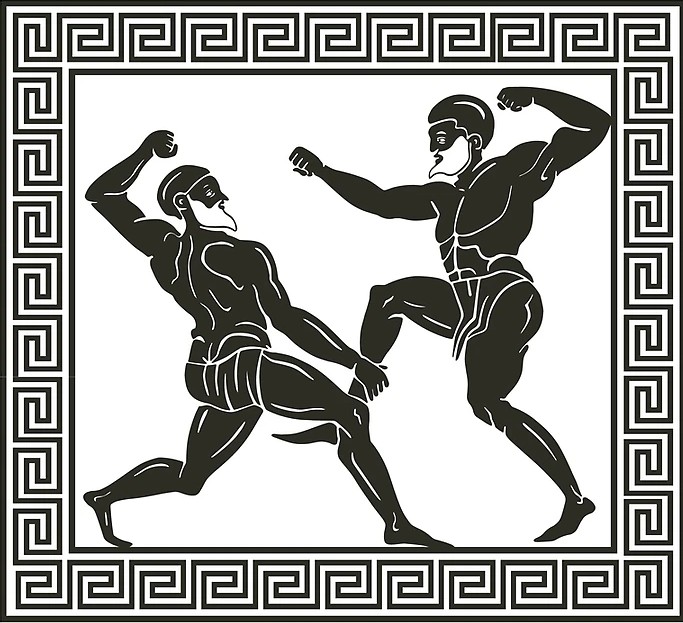
- Greek boxing emphasized endurance under punishment.
- Roman arena culture amplified violence for public display.
- The leather wraps evolved into the cestus.
- Wrappings thickened and sometimes incorporated hardened or rigid elements.
- The hand became more heavily reinforced.
- The striking surface became more destructive.
- Facial damage increased.
- The contest moved from festival athleticism toward spectacle combat.
Key Mechanical Shift
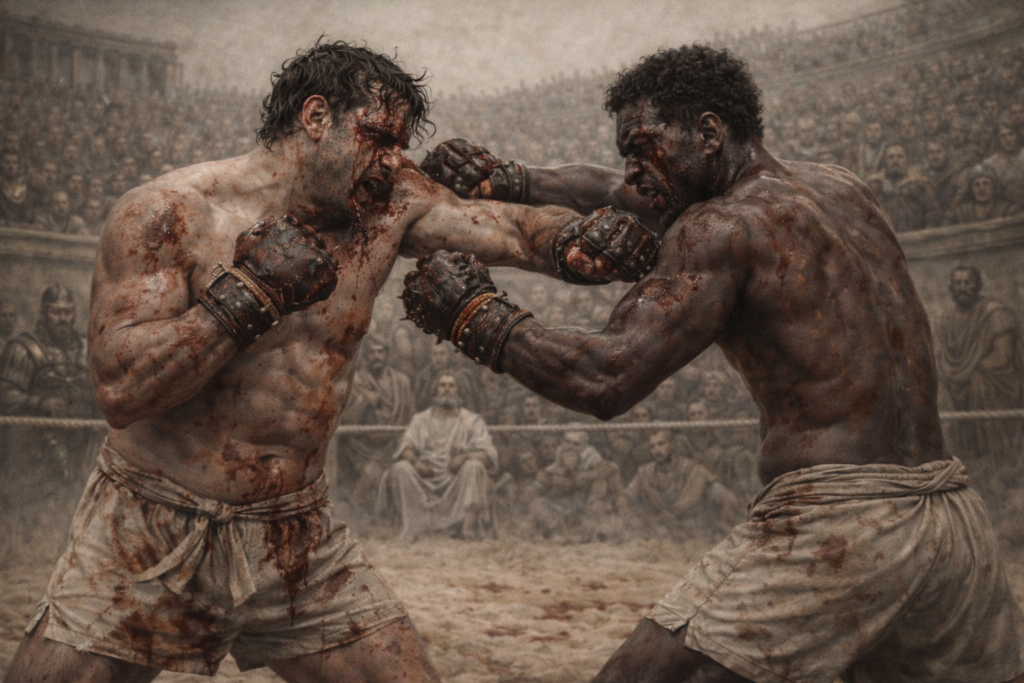
- The fist remained biomechanically a fist.
- It retained the ability to thrust and hook.
- It became an armored striking surface.
- The hand was protected even more securely.
- The opponent was protected even less.
Energy Difference
Greek:
- Heroic
- Enduring
- Ritualized
- Athletic
Roman:
- Harsh
- Spectacular
- Engineered for damage
- Arena-driven
Actor Adjustment
- Increase weight and commitment in strikes.
- Reduce any sense of sport.
- Allow brutality to register in the body.
- Emphasize impact and consequence.
- Keep exchanges deliberate rather than clever.
Medieval / Early Modern — Grappling-Heavy Chaos
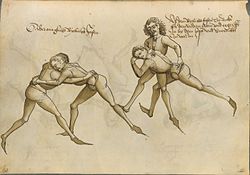
- Close range.
- Frequent collar grabs and clothing control.
- Off-balancing, shoving, and pulling.
- Strikes embedded inside grappling exchanges.
- Posture breaks frequently.
- Messy, personal contact rather than clean combinations.
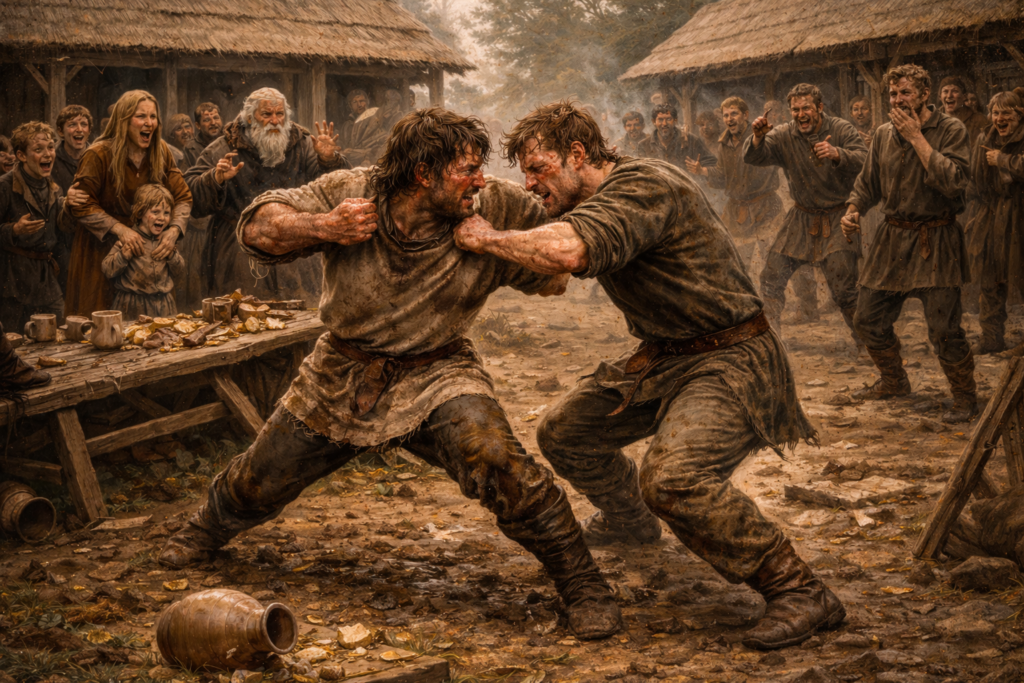
Actor Adjustment
- Collapse distance quickly.
- Mix shove, grab, and strike.
- Break clean lines and balance intentionally.
- Shift weight unevenly.
- Avoid polished boxing rhythm.
Victorian Bare-Knuckle — Tactical Prize Ring
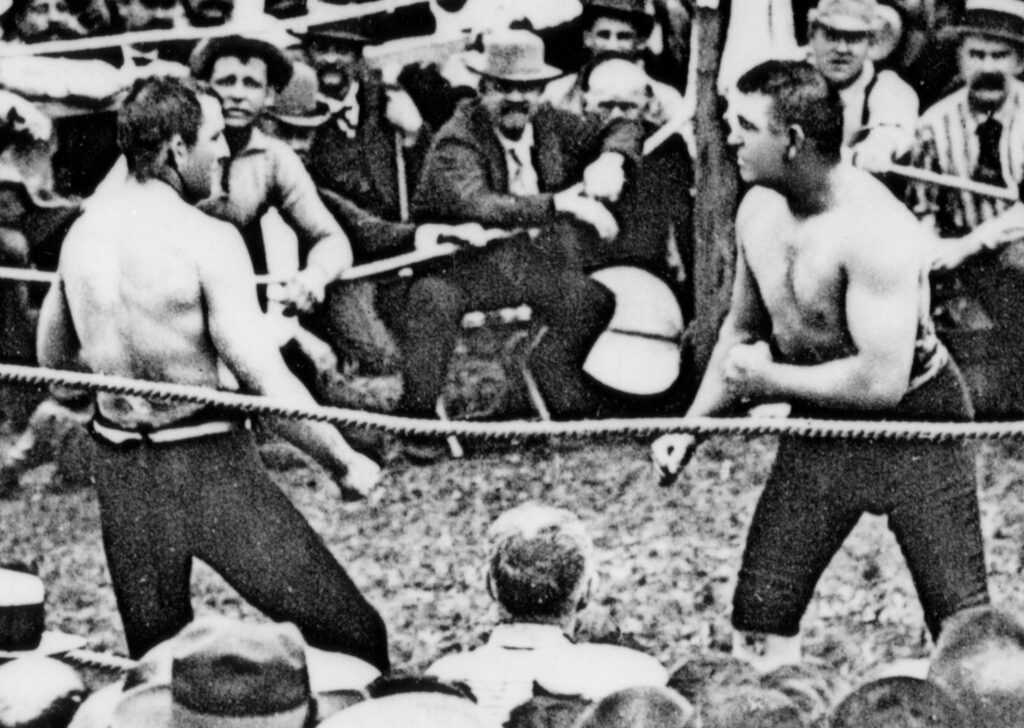
- Side-on stance.
- Head held slightly back from the line of attack.
- Guard more open than modern boxing.
- Solid, planted footing rather than bouncing footwork.
- Slower pacing; damage matters more than volume.
Crucial Distinction: Fist Orientation
- Fists turn inward so the palm side faces the opponent.
- The back of the hand is often presented rather than the little-finger edge.
- The hand rides directly above the elbow.
- Strikes snap outward and slightly downward.
- Emphasis on knuckle-first contact rather than flat-faced glove contact.
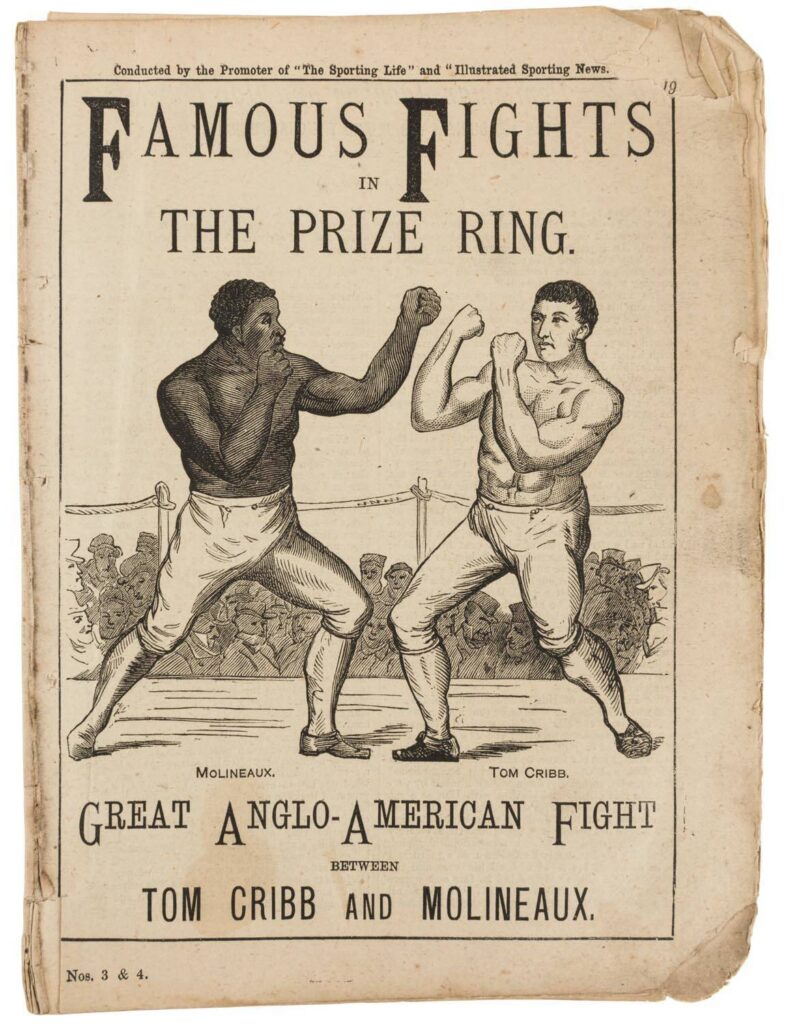
This allows:
- Snapping downward knuckle strikes to the bridge of the nose.
- Quick thrusting jabs from a vertical or inward-facing fist.
- Rolling circular hand presentations to disguise the line of attack.
- Grounded, damage-oriented punching rather than point scoring.
Actor Adjustment
- Turn the fists inward.
- Present the back of the hand to the opponent.
- Snap strikes outward and slightly down.
- Keep the head leaning away rather than slipping side-to-side.
- Plant the feet for weight and durability rather than bounce for speed.
Modern Queensberry — Sport Default
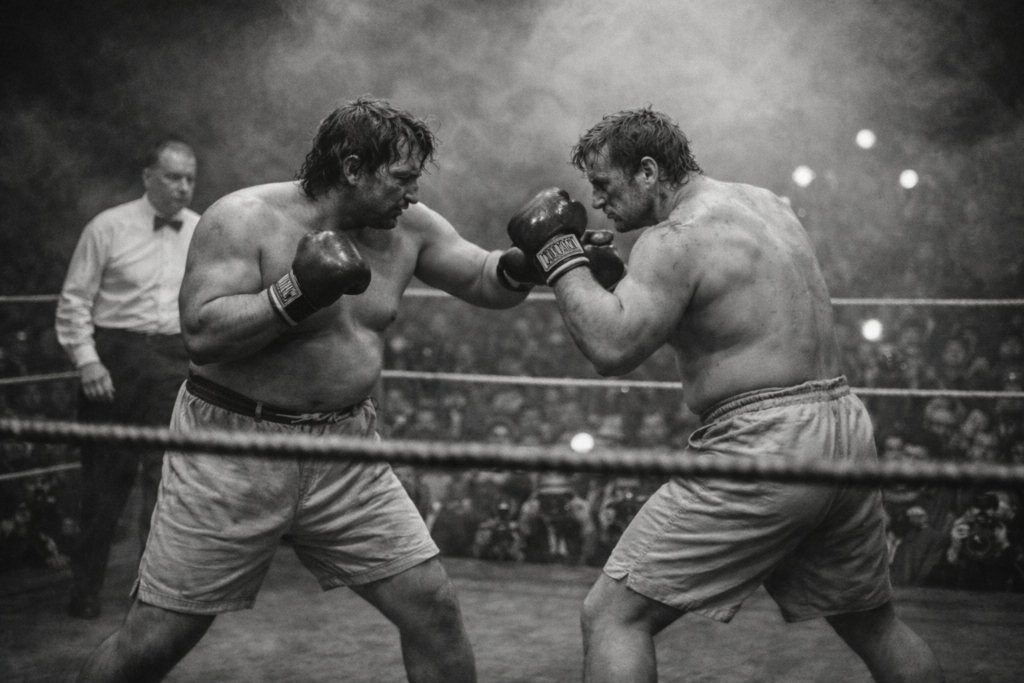
- Compact guard.
- Horizontal fist orientation inside padded gloves.
- Active head movement and slipping.
- Quick combinations.
- Continuous footwork and lateral motion.
- Emphasis on speed and points rather than single decisive blows.
Actor Adjustment
- Use when the script calls for sport or modern realism.
- Maintain mobility.
- Keep guard tight and compact.
- Emphasize speed and combination work.
- Strike with the padded face of the glove rather than knuckle-first presentation.
Closing Reminder
Period determines the look — not the execution. A jab remains a jab. A stomach punch remains a stomach punch. Safety mechanics never change.