
Guns can explode. You didn’t know that, did you? Even people who deal with guns every day can forget that, but it still remains true. Granted, it is extremely rare, but it is a fact that anything that fires an explosive can itself explode, including starter pistols firing a commercial blank. That shouldn’t immediately put you off of using a firing gun on-stage, for after all we all know that car tires and gas tanks and engines explode on passenger vehicles all the time, and the flying pieces can kill as easily as shrapnel from a bomb. Yet we still drive our families everywhere, trusting all those tiny explosions under the hood. The point is simple: an onstage gun, like any explosive device, carries a degree of risk. It’s unlikely, but possible—and pretending otherwise does us no favors.
Every once in a while we at Weapons of Choice would get a call from someone looking for “a replica gun that can fire but doesn’t use a blank”, which I guess means something that can make a big noise but that doesn’t actually fire anything. I wish that could be possible, but the few “non-guns” designed so far are very unreliable, difficult to maintain, costly and do in fact have explosives. For the time being, if it makes a sound, it comes from firing a blank, which produces rapidly expanding hot gases leaving the gun. And that is where the danger lies.
For my YouTube Video on how to know if a prop gun is stage safe, see my video
We’ll get to how guns for stage work in a minute, but first let’s get some terminology straight and other confusions cleared up.
What is caliber, or, How can a 38 be a 22?
“… the script specifically calls for a 38, but the technical director said we shouldn’t fire anything louder than a 22, but the stage director doesn’t want a small gun for that scene and would prefer a 45. What are they talking about !?! “
Gun discussions in rehearsal are famously confused. Some of that is the playwright not really knowing guns. Some of it is Hollywood shorthand that crept into everyday speech. Police jargon, movie dialogue, prop lists, and news reporting have all bled into each other, and now everyone thinks they’re being specific when they’re actually naming only one attribute.
Suppose for a moment that you’re helping a friend find his car in a large parking lot. He tells you that he owns a V-6. Then to be more helpful, mentions that it is a Ford V-6. He thinks he has told you a great deal, but he has only described the engine. You still don’t know if you’re looking for a sedan, a pick-up, a sports car, a van, what color it is, how many doors, etc. Ford Motor Co. used the V-6 in a lot of car and truck models, and right now you need to identify the car by look, not by what’s under the hood.
The same problem happens when we talk about guns. If you tell me you need a Colt 45, you have told me the manufacturer’s name and the barrel interior diameter. That sounds specific. It isn’t. Over the years “Colt .45” has been used to describe dozens of different physical guns, including (depending on era) both a classic cowboy revolver and a square-framed semi-automatic pistol. If I’m stocking your show, I still have to ask: what year is the play, who’s holding it, and where did they get it.
The worst confusion comes from trying to identify a style of handgun by its caliber. You’ll hear “He was shot by a .38” or “He was carrying a .357 Magnum,” and people immediately picture a certain iconic gun from TV. But caliber numbers only refer to the internal diameter of the barrel (measured in hundredths of an inch). That tells you the width of the bullet it fires but nothing about the gun. Certainly nothing about the barrel length, nor the frame shape.
Knowing the name of the manufacturer don’t help. They’ll build several different physical gun styles, then offer each style in multiple calibers to please as many buyers as possible. So the same basic frame might come in half a dozen chamber sizes. You cannot look at a photo of a handgun and reliably say, “That’s a .38.”
So where do we get this “shot by a 38” business? Well the papers might be correct in saying that someone was shot by a .38 caliber bullet, and that it logically came out of a .38 caliber gun. The most common of .38 caliber handguns is the revolver that was for the better part of the 20th century the standard issue revolver of most police forces in the United States. Inside police culture, “a .38” became shorthand for “the service revolver I carry.” Reporters picked it up. TV copied the reporters. Then audiences copied TV. Now “.38” means “revolver” in casual speech, even though there are many, many totally different revolvers — and even some non-revolvers — that fire .38 caliber ammunition.
The US army issues a side arm to its officers, and after the turn of the previous century had decided not on a revolver (the bullet chamber revolves before each bullet is fired] but on a semiautomatic pistol (the bullets are fed from a clip inside the grip]. The job was granted to Colt Firearm Company. Colt had already made successful pistols for the government since 1836. So which is the “Colt 45” mentioned in the script? The western cowboy gun, or the square frame modern looking semi-auto? Model 1870, 1873, 1878, 1894, 1898, 1902, 1911? They all look different, and are all “Colt 45’s”.
The .44 magnum is not a more powerful handgun than the .45 caliber revolver, but merely a caliber (slightly smaller that the .45) that was made famous by the Dirty Harry movies. In those films, the weapon of choice was a long barreled heavy frame revolver, so naturally this is the popular image of what a .44 magnum gun must look like. That’s just the effect of good branding. [Actually, .44 magnum ammunition is slightly more powerful that the larger .45 ammo at equal powder loads, but this has to do with weight/load/velocity calculations that are very boring, so let’s skip that for now.]
But a bigger-looking gun does not automatically equal “more deadly.” Frame size does not equal stopping power. Movies and television have also forced the idea on us that a larger gun is a more powerful gun, but again the size of the gun frame has nothing to do with the size of the bullet or how much gunpowder is behind it. A long barrel will make a bullet fly more accurately and further, so would be chosen for target practice or hunting, and a short barrel is going to be inaccurate at even mid-range distances. So it is not uncommon to see massive revolvers that are only .22 caliber, or tiny guns that can fit in your palm that are .45’s.
European manufactures use metric measurements; they measure their bullet diameters in millimeters rather than in hundredths of an inch. In order for US armed forces to be able to use NATO stock in the event of a war, the Army has switched to metric guns. A lot of semiautomatic handguns are made for 9mm ammunition, so we hear of a “9” as being a semi-auto pistol. But English or metric, a bigger number means a bigger bullet. Below are some (very rough) equivalents:
.22 cal = 6 mm
.32 cal = 8 mm
.38 cal = 9 mm
.45 cal = 12 mm
One last wrinkle: “caliber” refers to the inside diameter of the barrel… except it kind of doesn’t. Pistol and rifle barrels have spiral grooves (“rifling”) to spin the bullet. The bullet is actually made slightly larger than the smallest part of the bore so it can bite into those grooves, seal the gas, and start spinning. That means the number stamped on the box (.38, .45, etc.) is really a naming convention, not a precise physical reading from calipers. Different makers vary. A .38 that fits and fires safely in one gun might jam — or be unsafe — in another.
common name barrel bore diameter bullet diameter
.22 cal .217” .225”
.32 cal .315” .322”
.357 magnum .348” .357”
.38 cal .373” .375”
And then finally the brand names. Popular styles beget popular clones (just ask the makers of Scotch tape or Xerox copiers], so when one company comes out with a popular gun, every other manufacturer follows suit. The common name would often be associated with the maker that made it first or sold the most, but for example an Iver-Johnson .25 might refer to one of several pistol or rifle styles that Iver-Johnson Co. made over the years. So you would need to know what the common terminology was in the year the show is set if you want to know what kind of gun the character is talking about. Wait, it gets worse. The name Derringer can mean either the manufacturer (which made several different styles of handguns), or one of three different percussion single-shot pistols of the 1800’s, or a completely different style of two-shot cartridge pistol of the 1900’s. Add to that the problem of three different manufacturers trying to use the Derringer name, and then newspaper reporters using the name to mean any pistol small enough to fit in a coat pocket, and it gets really fun.
What is a Gun?
All guns have the same basic layout in common – a hollow tube that has one end closed. If you create rapidly expanding gas inside that tube, anything solid sitting between that gas and the open end will be shoved out at high speed. Using compressed air is one way to create that effect (air rifles do exist), but compressing gases is difficult and inefficient.
Anything that burns releases expanding gases, but how do get something to burn in a small area that has no outside oxygen? The most common way to create expanding gases is by burning gunpowder, which actually creates its own free oxygen as it burns. And the most common projectile is one made of lead. For a pistol or a rifle, the lead is in the form of a single bullet. For a shotgun, there are dozens of small projectiles called pellets or simply “shot”. Modern ammunition combines the powder and projectile in one easy to load cartridge. Gunpowder is actually a bit difficult to set-off, so a quick igniting compound, called a primer, is set-off first, and that is what really ignites the gunpowder.
The primer is touchy. The powder is stubborn. A gun works when the following sequence occurs:
- Finger squeezes trigger.
- Trigger releases hammer (or striker).
- Hammer smacks the primer.
- Primer flash ignites the main powder.
- Expanding gas drives the bullet down the barrel.
For shotguns, instead of one bullet you get a handful (or dozens) of pellets, plus a wad and compression pieces to keep it all aligned in the shell.
Let’s take a look at the cartridge, since we’ll need to know what’s in real ammunition before we can understand what a blank is. If you think about it, a loaded cartridge has all of the components of a hand grenade; it merely lacks a way of igniting itself.
Bullet – The conical shape of the modern bullet allows it to fly through the air with a great deal of stability, especially if it can be made to spin as it leaves the gun. The inside of gun barrels have gently twisting grooves (called rifling) that start that spin, and the bullet actually digs right into the grooves as it is forced out when shot. This helps get the spin going and also seals off the spaces from the grooves, preventing the expanding gases to leak around the bullet. That means that all of the force from the explosion can be transmitted directly to the bullet. So that the bullet can dig into the grooves, it is normally made of a soft metal, such as lead. The fact that the bullet gets carved by those grooves is what lets ballistic experts determine what gun fired what bullet. It also means that a thin layer of lead gets stuck inside the barrel after each shot, which has to be cleaned out periodically.
As I said, most bullets are made of lead, which is very cheap and malleable. Some modern bullets have tips or cases that are made of brass, steel, and even titanium, and some are made of layers in combination. The bullet diameter is the caliber designation, and bullets of one caliber can only be used in a gun of the same caliber. The length of the bullet, however, can vary widely, as can the shape and angle of the bullet nose. These different bullets have different penetration and flight capabilities.
After a bullet has been fired, it will usually be deformed on impact. The recovered deformed bullet is then called a slug. [I love those scenes in movies where the detective pulls out his penknife and digs out a slug embedded in a door frame, peruses it for a moment and then declares it to be “a 32” or whatever. Priceless, and completely impossible. Slugs are usually so deformed that only intense microscopic examination and careful measurement can determine the caliber.]
Compression piece – For shotgun shells only. Usually plastic “snow” or a hefty piece of plastic with spring-like design that helps keep all of the parts of the shotshell in place as it is being assembled. It flies out of the gun when fired but has nothing to do with the firing itself. It drops out of the way long before it can reach the target.
Pellets – Once fired from a shotgun, the pellets will all fly in the same general direction, but since their shape is spherical they each tumble in flight, each disturbed by the blast behind it and the turbulent wake of the pellet in front of it, which leads to a scattered pattern. That’s just what the hunter wants, a fuzzy distribution so he has a much better chance of striking his quarry than he would if he were to depend on a single bullet hitting a target.
The pellets can be purchased in different sizes, depending on the size of the intended quarry, but the thickness of the cartridge must always be an exact diameter match for the shotgun in which it will be used.
Wad – a stiff piece of cardboard or cloth that compresses the powder and also keeps it separate from the pellets. It also drops to the wayside once the charge is fired. Although used in shotgun shells, wads are also used in some, but not all, commercial blanks. These wads can sometimes hold onto a burning ember for some time after firing.
Powder – The explosive charge. The amount and composition is carefully calibrated by the ammunition manufacturer to not simply explode all at once but to produce an ever expanding force so as to keep accelerating the bullet during its travel down the barrel. It is considered an explosive burn rather than a true explosion. Gunpowder can be set-off by high heat or by an electrical charge. It also requires no oxygen to burn (the chemical reaction actually produces its own free oxygen), making it ideal for the airtight confines of the loaded barrel. That’s why a gun can even be fired underwater, or for that matter in outer space.
There are two basic types of powder that you will come across – blackpowder and smokeless. Blackpowder is the kind used for over a thousand years, and leaves a nice thick gray cloud of smoke around the gun and plenty of dirty residue inside. Smokeless powder gets its name by comparison only, for any gunpowder creates some smoke, although “smokeless” smoke dissipates very quickly. The residue from any burned powder (called “fowling”) is corrosive to steel, which is why guns need to be cleaned after use.
Either style of powder needs to be confined somewhat in order to produce enough pressure to create a gunshot sound. Even a large quantity of gunpowder poured on the ground will not cause an explosion if ignited with a match. You’ll get a lot of flame, heat, smoke, and a very strange hissing sound, but no bang. (Yes, it’s true: you can outrun a trail of burning gunpowder.)
Primer – A very thin coating of a quick igniting compound is allowed to dry onto a thin piece of metal. When this is struck by or against another piece of metal, the friction causes a spark that in turn creates sufficient heat to ignite the gunpowder.
The hammer of a gun actually strikes the reverse side of the primer, the part that doesn’t have the igniting compound. So what really ignites the primer? Cartridges are constructed so that there is a little bit of distance between the inside of the primer and another piece of metal. Dropping the hammer squashes the primer onto the other metal, and that friction is what causes the spark.
Shell – This term gets a bit mangled. It should refer only to the combination of the primer and the outer casing that holds the powder. Shells are made of brass for pistol and rifle rounds, and of plastic or cardboard for shotshells. When a gun has been fired, the spent rounds [minus the bullets] are often found near the gun, and these empty casings are correctly called shells. Because the shotgun shell looks the same before and after being fired, it is common to call the fully loaded cartridge a shell. Less excusably, the un-fired rifle bullet/casing combo [live ammo] is also sometimes called a shell.
Down the road, the military designers are looking to eliminate the casing completely, simply fusing the primer and the bullet onto either end of a solid block of formed gunpowder.
So here’s how a typical modern gun works:
A round is placed in the barrel, either manually or by the automatic or semi-automatic action of the gun. The hammer is pulled back and then locks in place but under a great deal of tension from the powerful main spring. When the trigger is squeezed, it releases the hammer, which, driven by the main spring, drops down onto the primer of the cartridge. The quick igniting compound is crushed between two pieces of metal and produces a modest spark which in turn sets off the main powder charge.
As the powder burns, the expanding gases dislodge the bullet from the casing and propel it down the barrel. It also causes the bottom of the soft lead bullet to expand, sealing the barrel and forcing the bullet into the interior barrel grooves. The grooves (“rifling”) have about a 1/4 turn from start to finish in most pistols, but that is enough to have the bullet fly out spinning. The expanding gases also cause a pressure wave which, when it hits our ears, our brains translate into a “gunshot”.
If we want the sound of “gunshot” without anyone getting shot by a bullet, we can use the same gun firing system, but instead of using a bullet, we use a blank cartridge. Let’s take a look at what a blank looks like compared to the real ammo shown above:
Parts of the blank cartridge:
As you can see, a blank is a cartridge that is only missing the bullet, Sometimes a small cardboard or plastic wad is used to hold the gunpowder in, but sometimes the brass end is merely crimped closed without a wad, and sometimes a false wax “bullet” is used to seal the tip and also make the blank look and act more like a real cartridge.
Without a bullet, a blank is perfectly safe, right? Well, NO! A blank has all of the explosive force of a regular bullet, just without the projectile. That force can do a devastating amount of damage. Let’s go through the list:
Ears – These things are loud, and there are only so many times that your ears can handle loud noises before permanent hearing loss sets in. And keep in mind that the loudness is comparable to a candle in the dark: from thirty feet away, it provides a comforting glow, but from two feet away can be blinding. Because of that intensity, always remember that firing even a “quiet” blank near someone’s head puts them at great danger of permanent hearing loss.
Eyes – The expanding gases are hot, and the louder the blank, the further the gas travels. Not only can it damage the eye by burning, but tiny fragments of unburned powder can be embedded into the lens. So find out where the gases go and keep the eyes out of the firing line.
Skin – The hot expanding gases don’t travel in a straight line, but twirl in a chaos of turbulence. Add to that the fact that many stage guns direct the blast “safely” to the floor. The hand that fires the gun can get scorched, and it isn’t even in the firing line. The heat can cause second degree burns if the skin is close to the barrel or chamber.
Fire hazard – The burning gunpowder can set stuff on fire, like fabric… or paper … or hairspray-treated hair. Make sure that nearby objects have been made fire resistant.
Static electricity – It is very hard to get a blank to fire. Something has to strike the primer just right and with a considerable amount of force in order to do so. Even external heat from a nearby fire won’t set one off until the temperature gets extremely high – sitting around a regular campfire isn’t hot enough to concern those gun-toting cowboys, although a building fire can cause ammunition stored inside to explode. Static electricity is another matter entirely. It can build in unexpected places and lead to some interesting results, as this anecdote will illustrate:
When we at Weapons of Choice bought blanks, we ordered only in small quantities: about fifty thousand rounds at a time. One shipment several years ago of the 6mm variety (tiny .22’s) came in the normal way – one cardboard box lined with bubble-wrap, filled with 50 cardboard cartons of plastic tins, 10 tins to a carton, 100 blanks inside each plastic tin. When we opened the large box, we noticed that one of the cartons was singed and blackened. Further inspection revealed that inside one of the tins, eight blanks had fired without being struck, causing a small fire that broke through and melted the plastic tin and began to char the carton. Somehow a static electric charge had built up at that spot and set off those blanks. If the rest of the plastic and cardboard had caught fire, it might not have been hot enough to ignite any other blanks, but the burning plastic would have melted and quickly spread the fire to the rest of the cargo container. This is why blanks can never be shipped using any kind of air service. Although this kind of incident is extremely rare, it can happen. Better it should happen in the back of a delivery truck on a highway rather than in the cargo hold of a jet at 25,000 feet. This is also why you should store your blanks in a fire-proof container.
By the way, when real bullets are caught in a fire, the gunpowder will explode, and some of the brass can certainly fly off as fragments, but the lead bullet itself won’t go very far – maybe less than a foot or so. Without being confined in a gun barrel, very little of the explosive force is directed towards the bullet. Instead it will want to move out in an expanding sphere. The force will always move in the line of least resistance, and that is through the thin brass casing. The lead bullet has comparatively too much mass, therefore too much inertia, to be effected by the small amount of force that happens to be directed its way. Those movie scenes of smallarms ammunition thrown on a fire and then the bullets flying everywhere are a complete fantasy.
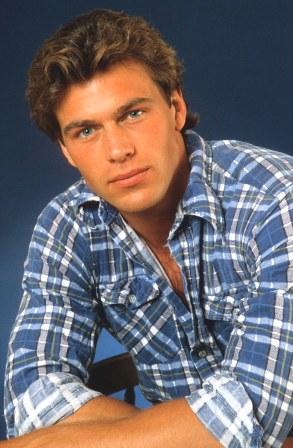
Let me give you three brief real-world cases. These are not urban legend. They happened. Every single one started with “it’s just blanks.”
The first is about a successful young actor named Jon-Eric Hexum. In the early eighties he parlayed a solid career as a hunky print model into a starring role as a hunky TV spy in a show called “Cover-Up”. His character used a .44 Magnum caliber snub-nosed revolver, which one evening was loaded with blanks. During a break in filming, he was killing time by just sitting and joking with the crew. In the middle of kidding around, he pulled the gun out and put it up to his temple, as though playing Russian roulette. Unfortunately, his finger did squeeze the trigger, and the gun went off. It was not a block-barreled gun, so the expanding force traveled down the barrel and pushed against the thin soft tissue of the temple. The skin was not broken, but the force traveled like a wave into the skull. The pressure shattered a thin piece of bone and forced a fragment deep into the brain. I want to make clear that there was no bullet in the gun, just expanding gases. He died almost instantly, and the body was taken off of life support a week later.
The mistakes committed, at a network studio no less, are unforgivable. The gun was supposed to have been taken from the actor during any break in filming. But more importantly, the actor had from the beginning been allowed to play with the prop guns as though they were toys. Instead of firing him at the first offense, the producers kept the actor, ignoring the many complaints from his co-star.

The second story is a little better known, but certainly bears repeating. Brandon Lee [son of martial arts superstar Bruce Lee] was in production for The Crow, and one scene required that a pistol be fired at him. An earlier scene was a close-up of the same revolver being loaded. This is a common enough event in action films, but in this case a long chain of mistakes came together to cause a tragedy.
The producers of the film hired (mistake one) a not terribly experienced person as the weapons provider. He had brought in (mistake two) a real non-modified gun, and had ordered both some blanks for the shooting scene and some dummy bullets for the loading scene. The blanks arrived on time but the dummy bullets didn’t. Instead of notifying the director (mistake three) so the scenes could be rescheduled, he purchased real bullet cartridges, removed the lead bullets, tapped out the powder, and then reattached the bullets to make his own – Ta Da! – dummy bullets (mistake four).
The loading-of-the-gun scene took several takes – taking the rounds, loading the chambers, closing the revolver, over and over again, ad nauseam. At the end of the day the dummy bullets were tossed aside without a final count (mistake five) and the revolver was put away without inspection (mistake six). If either of these last two safety measures had taken place it might have been noticed that one of the dummy cartridges was missing the lead bullet. You see, the weapons guy didn’t disable the primers on those “dummy” bullets he had made (mistake seven), and when some primers are fired they make barely any sound at all. That in fact is what happened – at least one time during the many takes the hammer was allowed to strike the dummy bullet. On one of those, the tiny little explosion of the primer was able to ignite the thin leftover gunpowder residue that sticks to the inside of the brass casing. The tiny puff that this created was just enough to break loose the lead bullet from the already once-loosened casing, and push the bullet an inch down the barrel. One of the technicians thought that he heard a strange little sound, but decided that, since he wasn’t an expert, he shouldn’t say anything (mistake eight). So there the bullet rested, like a ticking time bomb. The gun was put away without a complete cleaning (mistake nine), or even a basic safety check of inserting a pencil down the barrel to check for debris (mistake ten)
On the day of the shooting scene, the gun was brought in and, without further inspection (mistake eleven), was loaded with commercial blanks. These perfectly appropriate powder charges with no bullet head or any other projectile on it, not even a paper wad. Since blanks can’t hurt anybody (the common ignorance), the actor was handed the gun without giving him a safety lecture (mistake twelve), nor performing a “chamber check” (mistake thirteen). He was directed to shoot directly at Brandon Lee (mistake fourteen). When the gun was fired, the expanding gases of the blank crashed into the lead bullet inside the barrel. The bullet flew out of the gun and directly into Brandon Lee’s heart.
If any one of the fourteen mistakes had been averted, Mr. Lee would be alive today.
Our third story strikes closer to home, for it takes place not on a film set but in the auditorium of Desert Hills High School in Utah, where in 2008 a production of Oklahoma! was completing its run. As you probably know, the show requires several gunshots at critical moments of the play. While the school district maintained a strict no-weapons policy, for this production the school approved the use of a real .38 caliber revolver to be used for the sound effects, loaded with blanks and fired from the light booth. This approval was granted so long as the following conditions were met:
1) The owner of the gun (a parent) was to personally bring the gun and take it home for each rehearsal and performance.
2) Only that owner would load and fire the gun.
3) At no time would a student be allowed to possess or handle the gun

Very quickly, all three conditions were broken. The owner’s daughter (a student) was allowed to bring the gun to campus instead of her father, and 15 year old Tucker Thayer (who was running follow-spot) was put in charge of loading and firing the gun for the tech rehearsals and performances. Young Tucker was familiar with firearms, but had not dealt with blanks before. Several students complained that he was playing with the gun, sometimes pointing it at other students. That the drama instructor did nothing to put a stop to that is horrific enough, but it also shows that the teacher was well aware that what safety protocols there were had been grossly violated.
One hour before the final performance, a shot was heard from the light booth. Tucker Thayer was found with a gunshot wound to the head, self-inflicted, the damage caused from a blank fired from the real gun. He was pronounced dead by 10:00 pm that evening. Even though this was a good kid, a responsible kid, a kid with firearms training, what the instructor and the gun owner both failed to take into account was that he was a kid. Kids (and a lot of adults) will play with guns if given a moment to do so.
Here are some of the excuses given after the fact:
1) This was a horrible accident, but no one is at fault.
2) They used blanks, therefore the school was obviously deeply concerned with safety.
3) High school drama instructors are not trained in technical theatre, therefore couldn’t know about the danger.
4) Even theatre technicians don’t know anything about guns or blanks (too often sadly true).
5) Students often get into trouble, and teachers can’t control everything they do.
6) The gun was a “prop gun”, so it shouldn’t have been able to hurt anyone (this is a common failure to distinguish between a real gun used as a prop and a stage prop gun built with multiple safeguards).
Unfortunately, the real reasons for the tragedy were ignored both before and after the death. If the drama instructor had spent fifteen minutes on the internet, he could have found a mountain of information on safety protocols for theatres. If the director had bothered to pay less than $30, a far safer blank-fire only starter pistol could have been rented for all rehearsals and performances. If the school board had taken time to educate themselves on the nature of the weapons they were banning, they could have established a more intelligent set of guidelines. Instead, the instructor decided to put his trust in the hands of the owner of the firearm and then in the capabilities and maturity of a fifteen year old. The school district created a blanket ban on weapons, and then made exceptions without knowing what is was they were supposedly regulating.
All of these tragedies happened from using commercial blanks in unmodified real guns, meaning that the barrels were not blocked. But using a blocked barreled gun is still no guarantee of safety, for whatever force doesn’t travel down the barrel has to go somewhere. While certainly far less lethal, a lot of accidents happen every year with blanks fired, and it always comes down to people forgetting that blanks are not designed to save people’s lives. Blanks are designed to prevent holes from being blasted into walls. If you put a human near the blast, that person is going to lose.